King Cornet Serial Numbers
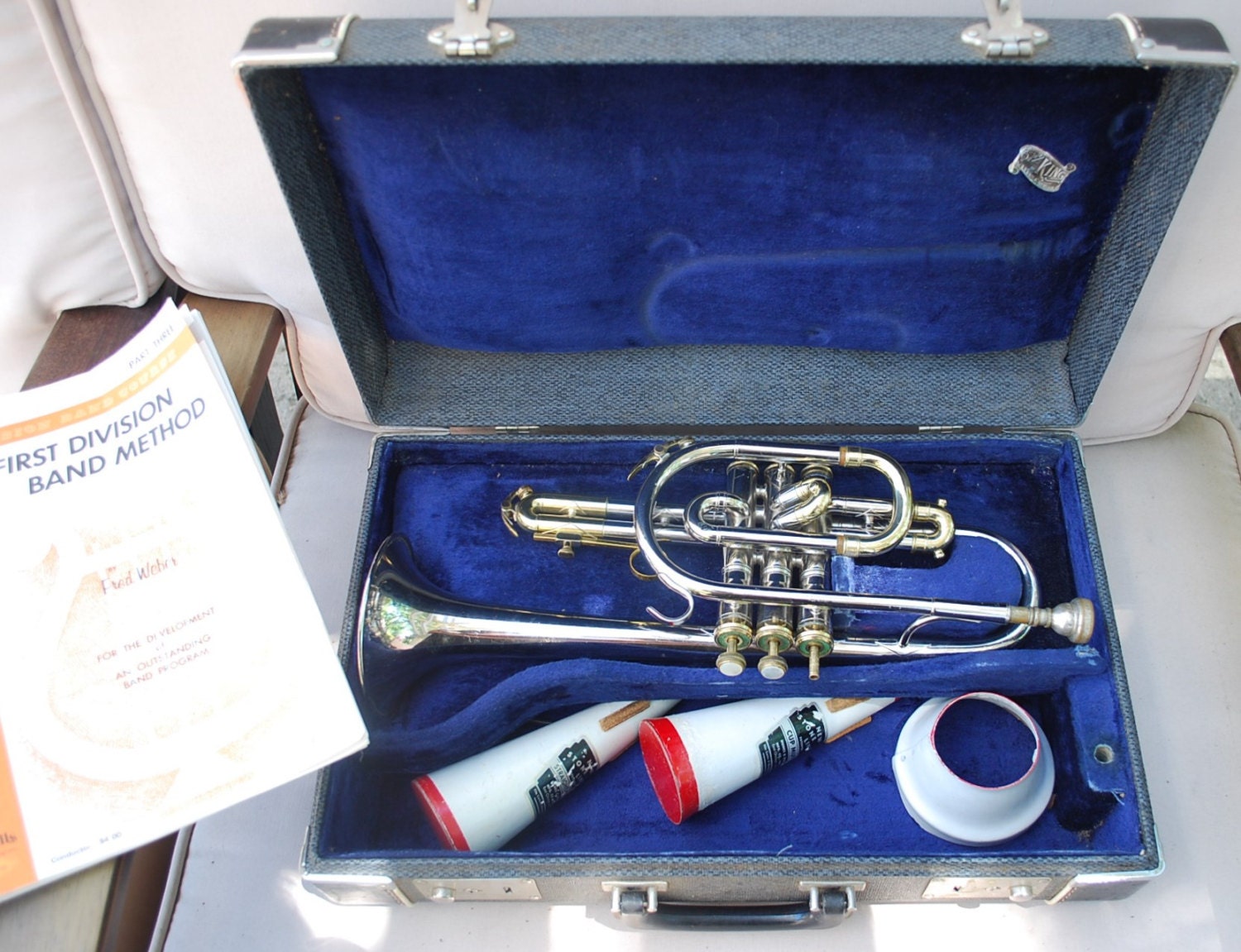
Hi, I found a King Master Model for sale online. Its pretty badly tarnished but nothing is missing. The valves do move but the 1st and 3rd valves are sluggish on the return up. Maybe they need some valve oil? The serial# puts the horns manufacture year of 1935.
Between 1928-1950 H.N White started putting on sterling silver bell's on to their Master trumpet and cornet models. The serial number leads me to believe that this cornet might have a sterling silver bell. What do you guys think? Am I wrong or right? I'm thinking if I buy this horn and have it restored, about how much would that cost? What would be the resale value once its restored? Hi, I found a King Master Model for sale online. Serato scratch live skin for virtual dj 7 download.
Its pretty badly tarnished but nothing is missing. The valves do move but the 1st and 3rd valves are sluggish on the return up.
Maybe they need some valve oil? The serial# puts the horns manufacture year of 1935. Between 1928-1950 H.N White started putting on sterling silver bell's on to their Master trumpet and cornet models. The serial number leads me to believe that this cornet might have a sterling silver bell. What do you guys think? Am I wrong or right? I'm thinking if I buy this horn and have it restored, about how much would that cost?
What would be the resale value once its restored? Click to expand.Sounds like you've done some research already. If you have not already gone to these sites, they are very good too: and.
The Master Model is a great horn, and I love my brass-bell version. However, you need to know that they were produced in both silver and brass bells in any given year. Serial number and year of production alone won't tell you if it's a silver-belled horn.

It should say 'Silvertone' or 'Silversonic' on the bell if it's really silver. The cost of restoration depends on lots of information that you have not given, and may not know. My understanding is that having the valves re-done costs about $75 per valve for replating, etc.
Conn Cornet Serial Number Search
As for sale value, that is driven by the market, but a silver-belled version will generally go for substantially more than an equivalent brass model. In my experience, restoring these horns is best done for the joy of owning and playing, as it usually costs more to do a restoration than you can get out of selling it.
Bear in mind that collectors often shy away from restored horns, as the restoration can mask problems that they don't want to buy into.
Conn & King Brass Serial Number List - DannyChesnut.com 'Conn & King Musical Instrument Serial Number Info' This list is not correct for Conn saxophones (see Conn Woodwind Serial Numbers) or Conn bugles (see Pan American Brass Serial Numbers). See Conn Reed Instrument List at Bottom of Page, or Click Return To Link Page, with additional Page on This Web Site. Some instruments, mostly from the 1920's, have either a star ('.' ) or the letter 'B' stamped near the serial number.
Current thinking is that these marks indicate a non-standard alloy, probably only of the bell. The suspicion is that a star indicates a gold brass bell (higher copper content), while a 'B' indicates a 'French brass' bell. None of this is confirmed at the moment (July 2009). Serial numbers with a 'V' engraved after the serial number are factory seconds. Conn Brass Serial Number List Serial Number Year Manufactured 1 1876 700 1877 1700 1878 3000 1879 5000 1880 6000 1881 7000 1882 8000 1883 9000 1884 1 1 1 1 1 1 1 1 1 1 1 1 1 1 1 1 1 2 2 2 2 2 2 2 2 2 2 2 3 3 3 3 3 3 3 3 3 3 3 3 3 3 3 3 3 3 4 4 5 5 6 7 7 8 8 9 C C E H K L M N P R GA3 GA4 GA5 GA6 GA7 GA8 GA9 HA0 HA1 HA HA HA HA HA HA76618, 37 0 38 0 39 0 40 0 41 0 42 0 43 0 44 0 45 0 5 0 Research Notes on Age Identifiers, January 2012 Note: From 1987 on, the two-digit prefix number plus 50 will give you the year of manufacture on all Conn products. Also, the serial numbers from 1981 - 1987 for the Brasswinds are for student trumpets and cornets only. Data for the years 1967 to March 1974 is rather sketchy, for it was around that period of time that the Conn Brasswinds were being manufactured in Abilene, TX.
Instruments made during that period are not likely to be their best examples, as the workers were still relatively new at the manufacturing process. In March of 1974 an alpha-numeric system was established, where the first character (letter) of a serial number indicated the decade; 'G' for the 1970's, 'H' for the 1980's, etc. The second character, also a letter, indicates the month of the year; 'A' for January, 'B' for February, 'C' for March, 'D' for April, 'E' for May, 'F' for June, 'G' for July, 'H' for August, 'I' for September, 'J' for October, 'K' for November, and 'L' for December. The third character (a number) indicates the number of year within the decade (indicated earlier by the first letter).
The fourth character (number) indicates the specific type of instrument: '1' = Cornet, '2' = Trumpet, '3' = Alto Horn, '4' = French Horn, '5' = Mellophone, '6' = Valve Trombone, '7' = Slide Trombone, '8' = Baritone Horn & Euphonium, '9' = Tuba, and '10' = Sousaphone. The remaining four numbers of the serial number indicate the production number of the instrument on a monthly basis.